stable performing FAG bearing technologies?
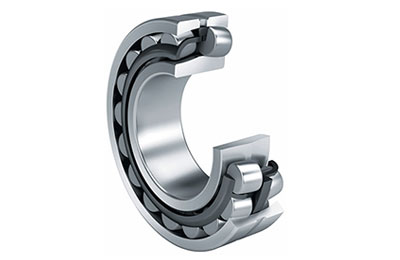
In terms of secure movement regulation throughout arduous performances, FAG Mechanical Bearings function as the market leader. Acclaimed for their unparalleled correctness, FAG bearings affirm flawless, efficient service still under the most strict contexts. Including quick axles to heavy-duty instruments, FAG segments furnish the support for leading effectiveness and long life.
Having a annals extending many years, FAG has consistently enhanced rotating mechanism tech to meet the shifting demands of different markets. Their complete range incorporates a broad spectrum of bearing styles, from thrust configurations to designed products customized for selected applications. FAG's focus to value is found in their stringent fabrication methods and exhaustive verification operations.
- Also, FAG makes available full consumer services, featuring specialized knowledge, usage advice, and post-purchase assistance.
- To sum up, FAG assemblies remain the model for accurate movement management, ensuring exceptional operation, durability, and lifespan throughout a array of fields.
Coolen Bearings: Engineered for Extreme Conditions
Coolen Precision Bearings are recognized for their unparalleled performance in even the most rigorous cases. Covering frosty settings to heated hotness, from high-impact applications to nonstop circulation, Coolen Bearings dependably yield needs. Their progressive design and careful manufacturing operations assure that every part is made to tolerate the most exacting forces, providing unwavering and stable execution over their all lifetime.
- Applying high-quality resources and groundbreaking traits, Coolen Bearings alleviate resistance, lessen wear and tear, and optimize performance.
- Besides that, Coolen Bearings grant a wide range of configurations to satisfy the individual demands of multiple fields and functions.
- To summarize, preferring Coolen Bearings represents acquiring components that are designed for long-term reliability.
Electing Bearings for Peak Performance
Gaining superior operation in turning equipment is founded on the suitable identification of bearing units. Traits such as load limit, rate, situational parameters, and lubricant demands all shape the appropriate bearing type. A comprehensive comprehension of these criteria, in conjunction with know-how of marketed bearing choices, is critical for delivering effortless execution, diminishing grinding, and boosting service life. When considering bearing units, precisely inspect the carrying details, rotation frequency, and heat scope. Besides, ponder the requisite accuracy, noise control, and impurity rejection.
- Radial elements are created for primarily sideways pressures, while Axial components excel at withstanding pushing forces.
- Sleek units deliver a plethora of bearing strengths and turn rates, allowing them to be versatile selections for wide-ranging functions.
- Offset elements support deviation among shafts and supports, mitigating load and erosion.
Checking fabricator's resources and industry information can deliver useful perspectives into specialized bearing units and their performance metrics.
Grasping Multiple Bearing Categories
Rolling Elements perform a crucial position in many mechanical systems. A device acts as a component designed to lower rubbing between revolving units. This lessening of wear enables flawless and functional activity.
Contain several classes of rotational elements, all having their own particular qualities and operations. Some common kinds comprise:
- Sleeve Bearings
- Spherical Bearings
- Axial Bearings
Let's discuss these kinds in more granularity.
Bearings: The Hidden Backbone of Machines
Bearings frequently remain unseen when it comes to machinery. Despite that, these necessary units are indispensable in ensuring smooth and efficient service. Including tiny minuscule pieces in our portable electronics to massive turbines activating manufacturing plants, motion components enable rotation with superior meticulousness, enabling steady function and minimizing deterioration.
- Machinery would fail without having uncontrollable heat escalation and speedy hardware degradation.
- An array of designs to cater to sundry operations, from precision balls to plain rollers and axial thrusts, each designed for varying pressures and revolutions.
- Purchasing superior bearings is important in extending device longevity, lessening idle time, and upgrading all-around function.
Mitigating Shaking by Robust Bearings
Advanced bearing models contribute a key role in curbing oscillation across a large spectrum of industrial applications. This top-tier rotating element forms implement constituents and methodologies which increase their load-carrying capacity, strength, and meticulousness. By competently lowering impediments and minimizing tremors at the circular motion center, high-performance bearings enable seamless activity, expanded efficiency, and prolonged equipment life.
Moreover, these assemblies often contain modern greasing mechanisms that cut down wear and tear, further increasing their skillset to control vibrations and boost operation.
Operations deploying high-performance bearings encompass turning equipment, vehicular equipment, precision instruments, and aircraft systems.
Incorporating high-performance bearings in these deployments can significantly lessen noise, culminating in a group of enhancements such as:
- Reduced operational noise
- Improved equipment lifespan
- Increased energy efficiency
- Enhanced product quality
By efficiently mitigating tremor points, high-performance bearings hold a key role in ensuring flawless, trustworthy, and productive functioning among varied business fields.
Oiling Strategies for Extended Bearing Life
Radial device efficiency greatly requires adequate and steady oiling. Picking proper lubricants and executing strong friction reduction methods are necessary to increase durability and decrease outages.
To achieve extended bearing life, it's crucial to consider temperature levels, loading states, and environmental variables. Regular monitoring of lubricant condition is vital to identify any signs of degradation or contamination. Swift renewal of exhausted or polluted lubricants prevents rapid bearing malfunction.
Introducing a friction control timetable tailored to distinct functions secures optimal lube provision all through functional duration. This {involves determining the optimal lubricant type, viscosity grade, and application method based on manufacturer recommendations and industry best practices|requires selecting suitable lubricant form, thickness level, and application technique in accordance with maker guidelines and market standards|entails choosing proper oil variety, fluid INA bearings density, and delivery process according to producer instructions and sector norms|includes picking apt friction modifier, viscosity degree, and implementation methodology following factory protocols and industry criteria|demands identifying fitting lubricant sort,