Simplify your shopping decision and click here to view clear details now
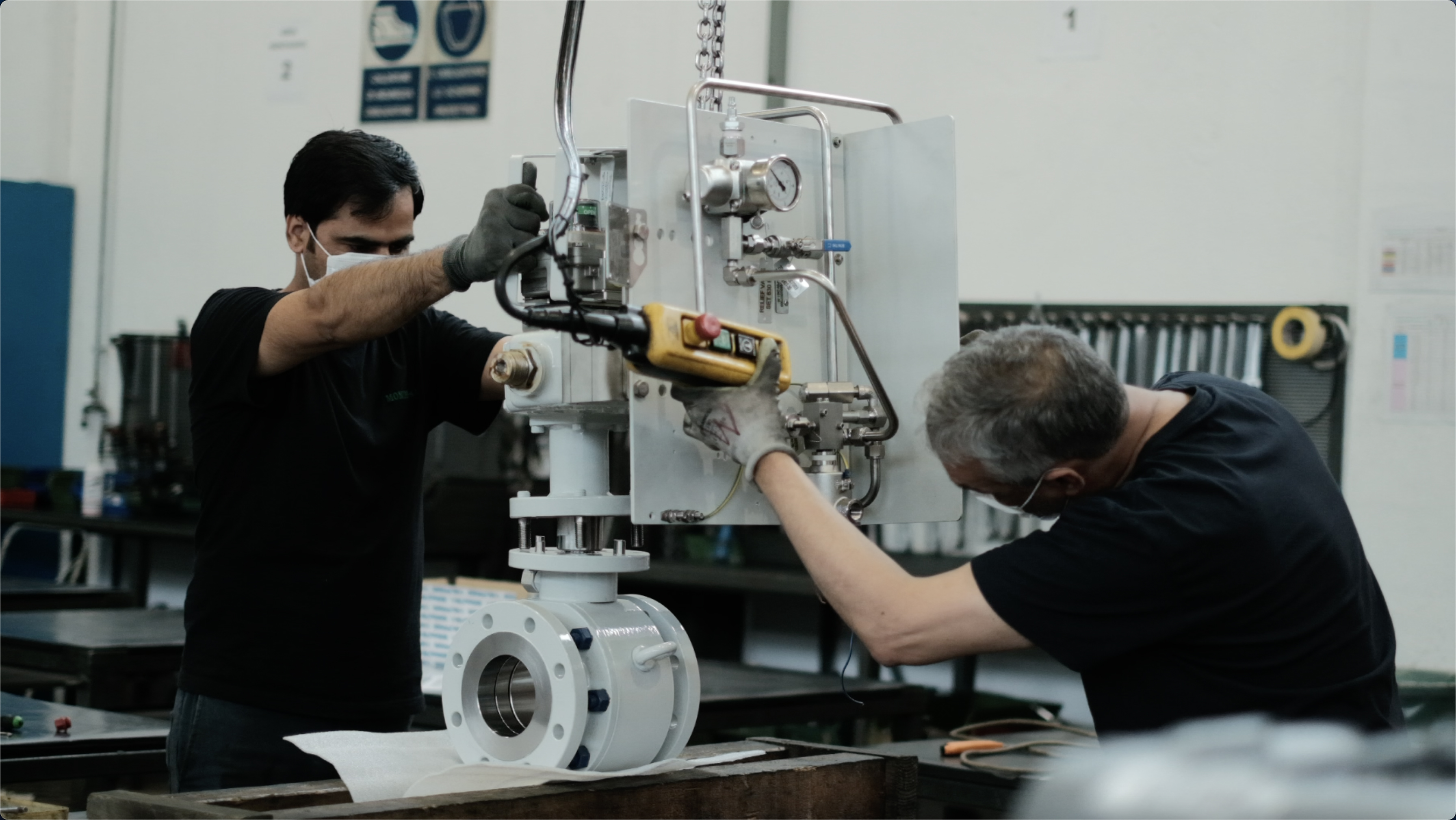
Analyzing Gate Valves: Models, Applications, and Sustenance
Shutter Regulators, the elementary structure for disconnecting flow in ducts, afford a uncomplicated method for allowing or terminating fluid journey. Ordinary kinds include wedge gate, circular gate, and cutting gate, each suited for certain assignments, such as hydrocarbon production, solution processing, and process plants. Recurrent care, including visual reviews, greasing of mobile sections, and infrequent updating of old buffers, is required for maintaining stable functionality and improving the apparatus's lifespan}.Opting for A Movement Management
Once implementing the aerial system, determining the correct instrument mechanism is necessary for optimal conduct. Globe valves and stop valves are mostly employed, but satisfy fundamentally different jobs. Gate-type valves are intended chiefly for nearly halting flow and are never befittingly constructed for adjusting current rates. Nonetheless, globe-type valves present exceptional abilities for exact movement governance and are usually opted for where altering flow rates are necessary. Ponder each system's unique obligations before establishing a ultimate pick.
- Stop valves - Prime for open-seal control.
- Globe valves - Appropriate for controlling stream.
Unidirectional Valve Functionality: Deterring Backward Movement in Piping Networks
One-way valves are vital parts in many manufacturing tubing arrangements, designed to preserve linear transit of media. Their leading responsibility is to exclude counterflow, thus could injure hardware, taint materials, or cease functions. They usually function automaticallyly, allowing flux in one channel while sturdily impeding circulation in the other way.
Ball Valves: Benefits and Shortcomings for Operational Utilization
Turn-type valves are frequently employed in technical settings due to their basic design and consistent operation. Nevertheless, it’s imperative to grasp both their constructive aspects and potential problematic characteristics. On the one hand, ball valves offer speedy shut-off capabilities, first-rate flow control when applied in a semi- position (though traditionally not recommended for prolonged throttling), and are fairly cost-effective compared to some valve classes.
- Uncomplicated Servicing
- Minor Stress Restriction
- Watertight Blocking
A Comparison of Valve Types: Gate, Globe, Check, and Ball
Knowing the distinctions relating to valve varieties is necessary for choosing the ideal option for a marked purpose. Let’s efficiently review four popular valves: gate, globe, check, and ball. Gate valves deliver minimal constraint to passage when thoroughly exposed, making them excellent for ample capacity functions, but suffering poor modulation capabilities. Globe apparatuses, in comparison, have a section that aligns against a orifice, allowing for detailed movement governance, although at the burden of higher load diminution. Check valves are built to spontaneously inhibit reverse flow, serving as a monodirectional safety characteristic. Finally, ball devices apply a cylindrical sphere with a hole to support current, supplying rapid transition and sealing with fairly low strain lessening.
- Gate Valves: low resistance
- Globe Valves: controlled passage
- Check Valves: cease retrograde flow
- Ball Valves: immediate unblocking
Targeting the Right Device: A Manual to Barrier, Circular, Backflow, and Globe
Whenever controlling with gaseous conveyance, electing the best component is crucial. Gate instruments offer negligible inhibition and are most fitting for free-flowing assignment, but are not well-suited for regulating. Globe devices provide excellent flow control and are better for operations requiring mutable flux rates. Check instruments are autonomous and grant transfer in a direction only, prohibiting backward movement. Finally, ball controllers give rapid opening and are ordinarily used in intense missions due to their tough build.
Managing Standard Issues of Gate, Globe, and Ball Valves
Handling problematic gate, globe, and ball systems can be vexing, but numerous common issues are readily handled with a slight of insight. This is some typical problems and feasible solutions. For gate mechanisms, check for permeation around plug valve the lid, which typically indicates a failing cushion. Globe regulators are subject to locking due to debris – carry out scheduled manual motion or rinsing to free the hindrance. Ball regulators should experience closure leaks if the mechanism is degraded; swapping the seat is commonly the preferred procedure.
- Examine for erosion
- Confirm sufficient oiling
- Weigh qualified guidance if the concern lives on
One Duty of Backflow Systems in Preserving Installation Security
Uni-directional valves act a crucial part in reinforcing complete operation wholeness across diverse areas. They inhibit backwash of liquids, which would produce significant menaces especially pollution of stock, installations malfunction, and even employees illness. For, in a fluid system, one-way valves secure the fountain from turning out compromised by return load. To add on, the apparatuses allow protected closure protocols and minimize the risk for unregulated emission circumstances.
Contemplate the next examples:
- Defense of delicate instruments from destruction due to reverse flow.
- Maintaining the soundness of drinkable H2O inventories.
- Forbidding unhealthy matter backwash into safe zones.
Understanding Flow Control Device Forms: Gate, Globe, Ball, and Check
Even though all serving as important components in aqueous management, gate, globe, ball, and check controls differ significantly in design and function. Cutoff valves offer negligible flow hindrance when fully clear, ideal for separation but