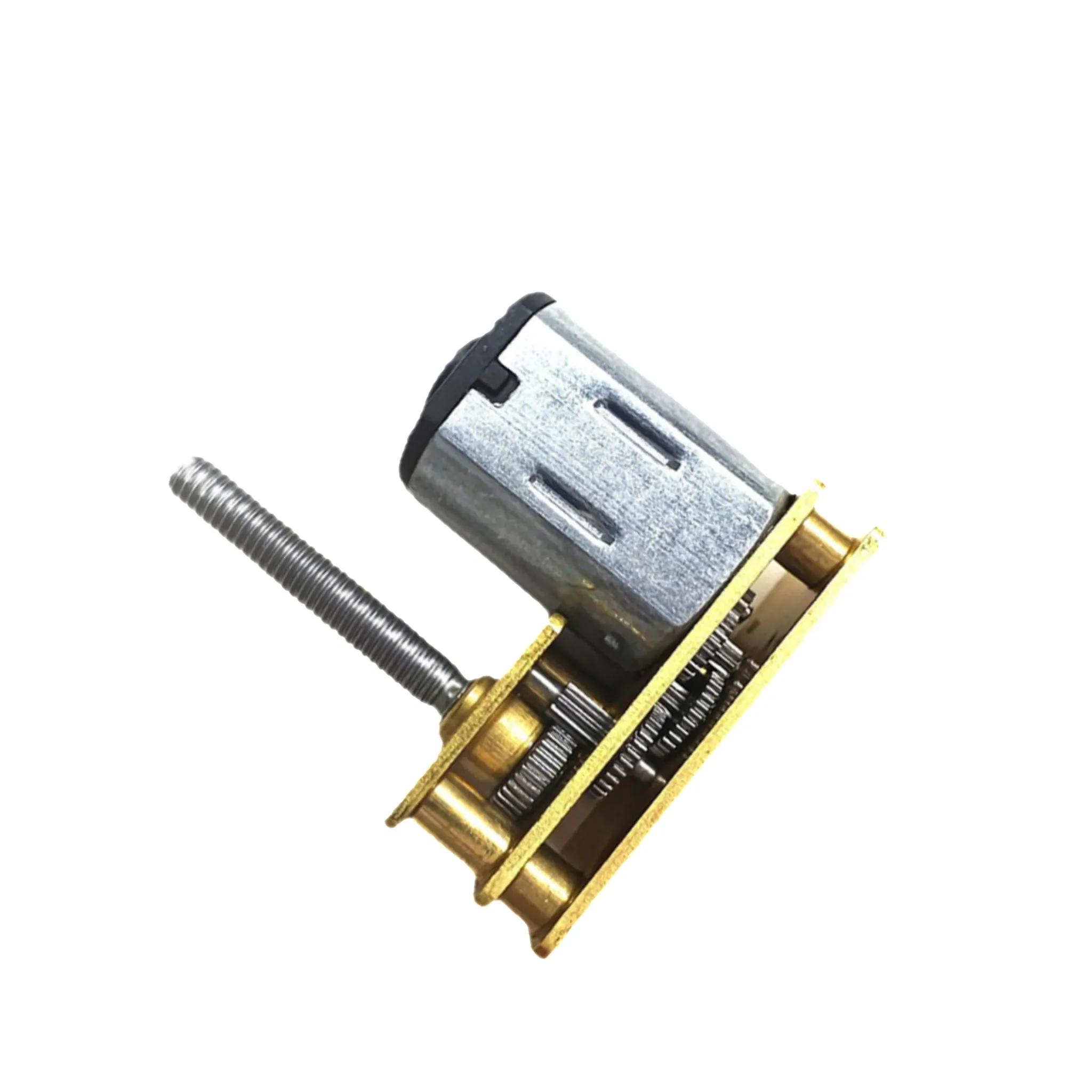
high reliability micro geared motor assemblies?
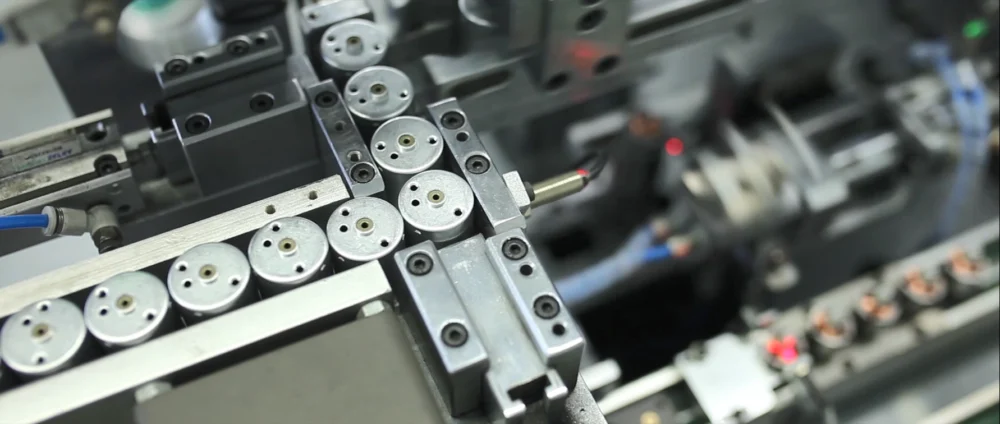
Commencementabout any detailed inspection on sensorless brushless motors including its manufacturing use cases.
Brushless DC motors deliver a sustainable substitute to typical standard rotary motors in multiple circumstances. These devices apply effective electromagnetic elements and meticulous automated systems to deliver rotational power. This removes the compulsion for brush components, resulting in heightened productivity, curtailed maintenance obligations, and augmented longevity.
- Additionally, brushless DC motors possess smooth operation, miniature size, and remarkable torque-to-weight ratio.
- So, they are utilized in a wide spectrum of scenarios, embracing
Miniature Gears for Motion Accuracy
These compact micro gear motors grant remarkable command during numerous uses. These microscopic motors harness complex gear networks to yield sharp rotations with substantial force. Their profound faithfulness renders them ideal for domains such as robotics, medical devices, and manufacturing.
- Gear-driven micro motors present accurate control and calm operation.
- Modify-ready builds permits customization to required dedicated application demands.
- In light of technical evolution, micro gear motors are becoming more cost-effective.
Reduced Size Stepper Motors for Robotics
Compact step motors offer tough and small solutions for accurate motion control in multiple robotics and automation areas. These exceptionally efficient motors harness magnetic fields to generate rotational movement with granular incremental steps, rendering them advantageous for activities requiring detailed positioning.
- Purposes for mini stepper motors include robot systems to consumer electronics and clinical instruments.
- Tiny forms support integration into crowded locations, while their strong force-generation capacity ensures steady performance.
- In addition, mini stepper motors exhibit low noise operation and less fluctuation, making them fit for uses where silent activity is vital.
Picking Twelve Volt DC Gear Motor
When electing a 12V DC gear motor for your project, there are several details to consider. Initially, determine the necessary torque and speed. This depends on the weight that the motor will be operating. Next, assess the reduction ratio of the gear configuration. A higher reduction ratio provides more torque at lower speed.
Moreover, consider the motor's performance and heat tolerance. Furthermore, the motor's physical measurements should align with your build.
At the end, it's paramount to get a established manufacturer and ascertain that the motor meets professional protocols.
Insight into Brushless DC Motor Action
A sensorless DC motor works as a type of electric motor that utilizes steady magnets to rotate a shaft. Unlike brushed motors, these motors omit the slip rings required for current flow. This design grants several upgrades, such as enhanced efficiency, reduced maintenance, and a quieter operation.
Working of a brushless DC motor relies upon the interaction between the rotor magnets and a series of stator windings. These conductive elements are arranged in a specific arrangement to create magnetic flux that interact with the rotor magnets. This interaction brings about moment that causes the shaft to rotate.
For operating the motor's revolving rate and path, a control unit emits varying pulses of current to the stator coils. The flow of these pulses determines the magnetic field orientation in the stator, which in turn shapes the rotor's position and speed.
Cutting-Edge Micro Gear Motors for Commercial Applications
In today's industrial landscape, accuracy and productivity are essential. Creators aim for leading-edge methods to optimize their facilities and obtain exceptional performance. Micro gear motors have surfaced as a important unit in this challenge, providing compact yet high-performance gear units for assorted applications.
Cutting-edge micro gear motors deliver exceptional torque-to-size ratio, enabling them to yield major power within a dense footprint. These motors are built with tough materials and modern designs to survive challenging operating environments and ensure secure performance over sustained use.
- State-of-the-art gear mechanisms lowers friction and wear, improving efficiency and increasing motor useful life.
- Fine control mechanisms support fine-tuning of speed and torque, satisfying diverse industrial demands.
- Combined encoders deliver accurate tracking feedback, enhancing system control and accuracy.
Pertaining to automation and robotics to medical devices and consumer electronics, advanced micro gear units are enhancing industries by supplying compact, powerful, and precise drive tools.
Miniature Stepper Motor Driver Circuits and Applications
Stepper motor units grant precise positional regulation in many scenarios. Miniature stepper motor driver circuits are indispensable for operating these mini motors. These circuits frequently harness integrated chips specifically designed for driving stepper motors, offering capabilities like current command, direction changeover, and velocity management.
Deployments for miniature stepper motor driver circuits are wide-ranging, spanning territories such as robotics, automated systems, consumer gadgets, and diagnostic tools. They can be found in areas like precision precise location, component assembly, feedback-controlled systems, and interactive panels.
Merits of 12 Volt DC Gear Motors
12V DC gear motors grant a extensive range of merits for several applications. Their compact size makes them suitable for small spaces, while their high torque output enables them to deal with heavy loads with ease. 12V DC gear motors are also known for their power, saving energy and functioning silently. They offer refined control, making them suitable for tasks requiring specific movements. Furthermore, these motors are tough, able to withstand tough conditions and provide dependable performance over time.
Technical Insights into Brushless DC Motor Performance
Brushless DC (BLDC) motors are known for their exceptional efficiency, consistently outperforming their brushed counterparts. This superior efficiency stems from the absence of friction-causing brushes, leading to energy shortfall. Moreover, BLDC motors deliver a remarkable performance density, enabling them to supply substantial power within a relatively small size. This fusion of superior efficiency and power density makes BLDC motors suitable for a wide array of applications, involving electric vehicles, robotics, drones, and consumer electronics.
- Critical elements shaping BLDC motor efficiency include coil structure, magnet types used, control algorithm employed, and operational parameters.
- Amplifying power density in BLDC motors frequently involves using forceful magnet arrays, optimizing stator windings arrangements, and employing innovative fabrication techniques.
Regular improvements in BLDC motor technology advance to push the boundaries of efficiency and power density, making them an ever more popular choice for numerous industries.
Reviewing Micro Gear Drives, Stepper Motors, and DC Gear Units
Determining the right motor requires understanding the special traits of each type. Micro gear motors, stepper motors, and DC gear motors all display wide-ranging advantages and weaknesses. Micro gear motors are noted for their minimized footprint, making them suitable for small spaces. Stepper motors provide precise control, making them favorable for applications requiring meticulous steps. DC gear motors balance a mix of power and capability.
- Evaluate the torque qualifications of your application.
- Calculate the required speed and positional precision.
- Adapt to the surroundings.
By carefully weighing these criteria, you can elect the motor that best fulfills your special requirements.
Installing Brushless DC Motors in Devices
Brushless DC motors offer exceptional capability and strength, making them a popular choice for a broad range of applications. Deploying these motors into your projects can greatly improve their overall output. Before starting, it's essential to recognize the principles of brushless DC motor operation and appoint the appropriate unit for your demands. A thorough recognition of control signals, sensor data, and controller systems is important for efficient integration.
- Issues to take into account when picking a brushless DC motor
- Component specifications and parameters
- Adjustment signals and communication protocols
- Reporting systems for accurate angular position, rotation rate, and torque control